

You’ve tried the stacked morning routine with six supplements and a ten-step skincare shelf. The results? Minimal. The overwhelm? Real. Most people aren’t failing because they lack dedication. They’re failing because the wellness market drowns you in options, makes vague promises, and rarely tells you which products are actually clean. Building a routine that works means cutting the noise, matching every product to a specific goal, and insisting on grass-fed, pasture-raised sourcing that your body can actually use.
Table of Contents
- What you need before starting a clean supplement routine
- Step-by-step guide to building your clean supplement routine
- Clean skincare routines: Less is more
- Quality and safety: Avoiding common supplement mistakes
- Our perspective: Why simplicity and skepticism win for clean wellness
- Clean supplement and skincare essentials: Simplify your next step
- Frequently asked questions
Key Takeaways
| Point | Details |
|---|---|
| Start with your goals | Match supplements and skincare to specific wellness needs before choosing products. |
| Go slow and steady | Introduce one new supplement at a time and monitor for side effects or improvements. |
| Minimalist skincare works | A simple routine of cleanser, moisturizer, and sunscreen delivers most of the benefit. |
| Check for safety and quality | Always vet supplement sources, avoid unproven trends, and prioritize verified clean, grass-fed, or pasture-raised products. |
| Consult your provider | Discuss all supplements with a healthcare professional, especially if you take medications or plan surgery. |
What you need before starting a clean supplement routine
Knowing why you want a cleaner routine is one thing. Actually assembling the right tools and information before you begin is another. Starting without this prep work is where most routines go sideways.
First, get clear on your specific goals. “Better health” is too vague to act on. Do you want stronger joints, clearer skin, deeper sleep, or faster recovery after workouts? Each goal points to different nutrients, different timelines, and different ways to measure success. Specificity matters here.
Second, understand that a step-by-step clean supplement routine should start by matching supplements to specific goals, then introduce them slowly to avoid unnecessary combinations that strain organs like the liver. This is medical common sense, and it applies to skincare too.
Third, gather some baseline data. Simple bloodwork covering vitamin D, ferritin, magnesium, and inflammatory markers gives you a starting point. Without this, you’re guessing. With it, you’re steering.
Here’s a quick reference for the core supplies you’ll need:
| Item | Purpose | What to look for |
|---|---|---|
| Grass-fed collagen peptides | Joint, skin, and gut support | Pasture-raised, no fillers |
| Gentle cleanser | Daily skin cleansing | Fragrance-free, pH-balanced |
| SPF 30+ broad-spectrum sunscreen | UV protection | Mineral-based preferred |
| Biomarker lab panel | Identify deficiencies | Vitamin D, ferritin, magnesium |
| Third-party tested multivitamin | Fill nutritional gaps | NSF or USP certified |
When evaluating any supplement, scan the label for synthetic supplement warnings like titanium dioxide, artificial colors, or mystery “proprietary blends.” Short ingredient lists from identifiable sources are always the better sign. Exploring best grass-fed supplements is a solid starting point when narrowing down your picks.
Pro Tip: If the supplement label lists more than three inactive ingredients you can’t pronounce, put it back on the shelf. Clean products don’t need chemical camouflage.
Step-by-step guide to building your clean supplement routine
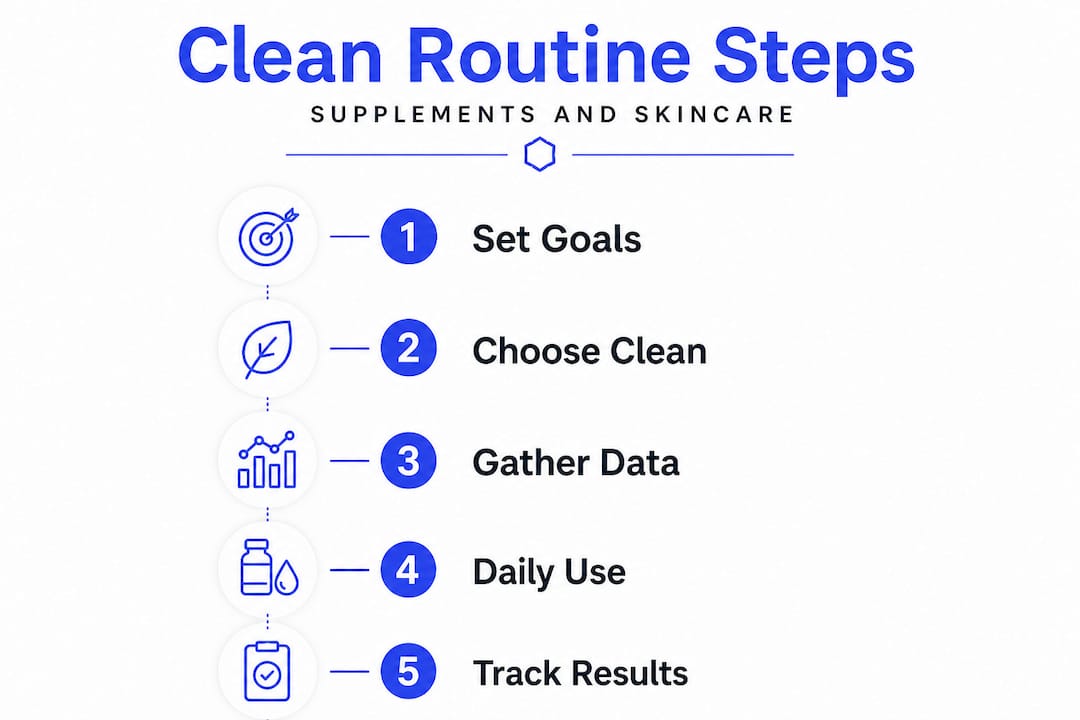
Once you have your tools and clarity, it’s time to build a routine tailored to your body and goals. This process works because it’s sequential, not scattershot.
-
Clarify your goals. Write down one to three specific outcomes you want from supplementing. Skin elasticity, joint comfort, and energy are measurable. Vague goals produce vague results.
-
Choose high-quality supplements and skincare basics. Prioritize pasture-raised and grass-fed sourcing. Check the collagen supplement guide to understand how sourcing directly affects collagen bioavailability and skin outcomes.
-
Start with one product at a time. Add one new supplement every two weeks. This makes it easy to identify what’s helping, what’s neutral, and what might be causing a reaction. Rushing this step is the single biggest mistake people make.
-
Plan timing and consistency around meals. Timing and food pairing matter significantly for absorption, especially for fat-soluble vitamins like A, D, E, and K. Take fat-solubles with your fattiest meal of the day. Keep magnesium and B vitamins consistent at the same time daily to build rhythm.
-
Track your response honestly. Keep a simple log. Note energy levels, sleep quality, skin texture, and any digestive changes. Most people skip this step and then can’t tell what actually worked.
-
Reassess every 12 weeks. Return to your baseline biomarkers after three months. Adjust based on what the data shows, not how you feel on one good morning.
| Feature | Natural (grass-fed/pasture-raised) | Common commercial products |
|---|---|---|
| Bioavailability | Higher, closer to ancestral nutrition | Often lower, synthetic forms used |
| Additive load | Minimal, transparent labels | Frequent fillers, binders, colors |
| Sourcing transparency | Traceable, US-based GMP facilities | Often unclear or offshore |
| Environmental impact | Regenerative farming practices | Industrial, less sustainable |
| Cost | Slightly higher | Often cheaper, quality varies |
Understanding the risks of synthetic supplements makes the value comparison above easier to justify. Quality costs a little more. But it also does more.
Safety warning: Supplement and medication interactions can be serious. If you take any prescription drugs, tell your doctor about every supplement you use. This is especially critical before any surgery. Herbal ingredients like St. John’s Wort, fish oil, and vitamin E can affect bleeding, anesthesia, and drug metabolism in ways that carry real risk.
You can browse the full supplements collection to compare clean-sourced options side by side once your goals are clear.
Clean skincare routines: Less is more
With your supplement routine in place, pairing it with a minimalist clean skincare routine maximizes overall health and glow. The skin is your largest organ. Flooding it with twelve products doesn’t accelerate results. It usually creates inflammation, barrier disruption, and confusion about what’s actually working.

Dermatology-aligned clean routines emphasize a simplified core: cleanser, moisturizer, and broad-spectrum sunscreen, with targeted treatment products added only when there’s a specific reason. That’s it. Three steps can genuinely transform skin health when each step is done with the right product.
Here’s what belongs in a clean, effective daily skincare routine:
- Gentle, fragrance-free cleanser: Use morning and night. Removes oil, environmental residue, and product buildup without stripping the skin’s acid mantle.
- Moisturizer with clean actives: Grass-fed tallow cream is worth serious attention here. Its fatty acid profile closely mirrors human sebum, making it exceptionally compatible with skin biology.
- SPF 30+ mineral sunscreen: Non-negotiable for morning use. UV exposure is the leading driver of accelerated skin aging and pigmentation issues.
- Optional targeted treatments: Retinoids for cell turnover, niacinamide for tone, or exfoliants for texture. Introduce these one at a time, not simultaneously.
Understanding why natural skincare works on a cellular level helps you make better product choices. And if you want to support skin from the inside out, reviewing natural skin health supplements shows how collagen, zinc, and omega-3s complement your topical routine.
Pro Tip: Never layer a retinoid with a vitamin C serum or an exfoliant on the same evening. The resulting irritation looks like a skin reaction to “clean” products, when the real problem is overloading your skin barrier with conflicting actives.
Quality and safety: Avoiding common supplement mistakes
A clean routine is only as good as its sources. Here’s how to avoid common traps and keep your health protected.
The supplement industry is largely self-regulated, which means a compelling label and an influencer endorsement do not equal a safe or effective product. Supplement marketing driven by social media can be genuinely unreliable, and high-quality routines must include skepticism, safety checks, and attention to recalls and contamination risk.
Do’s and don’ts for buying and using supplements:
- Do look for NSF Certified for Sport, USP Verified, or Informed Sport seals on labels
- Do check the FDA’s MedWatch database for recent supplement recalls
- Do choose brands that publish their third-party Certificates of Analysis (COAs)
- Don’t buy supplements that list “proprietary blend” as a cover for undisclosed dosing
- Don’t assume “natural” on a label means tested, safe, or effective
- Don’t stack new supplements based on a social media trend without checking interactions
Staying informed through modern science and supplement safety research is one of the best habits you can build into your routine. Verification isn’t paranoia. It’s what smart, health-conscious people do.
Our perspective: Why simplicity and skepticism win for clean wellness
Here’s the uncomfortable truth: most clean wellness routines fail not because people choose the wrong products, but because they choose too many of them. The social media wellness loop rewards constant novelty. A new supplement every week. A new skincare ingredient every month. The appearance of optimization without any actual measurement.
Real results look different. They come from two or three well-sourced supplements that match your actual biomarker deficiencies, used consistently for months. They come from a skincare routine you don’t change every season. They come from reading labels critically, not just trusting beautiful packaging or an influencer’s glowing endorsement.
We’ve also noticed that people who commit to clean supplement wellness principles, meaning quality over quantity, transparency over trend-chasing, and patience over instant results, are the ones who actually see long-term change. Skepticism isn’t the enemy of wellness. It’s the gatekeeper that keeps your routine honest.
Clean supplement and skincare essentials: Simplify your next step
If you’re ready to put this guide into practice, here’s how to simplify shopping and make your routine truly clean.

The hardest part of starting a clean routine is knowing where to begin. Cohld makes that simpler by sourcing exclusively from grass-fed, pasture-raised ingredients with no synthetic fillers, hormone disruptors, or unnecessary additives. Whether you’re starting with grass-fed collagen peptides for skin and joint support or looking for a topical option like tallow cream that works with your skin’s natural biology, each product is built for people who read labels and expect transparency. You can explore the full supplements range to find the right fit for your specific goals.
Frequently asked questions
How can I tell if a supplement is really ‘clean’?
Look for grass-fed or pasture-raised sourcing, third-party testing certifications, and short ingredient lists free of fillers. Be cautious of marketing-driven “clean” claims that lack verification behind them.
How soon will I see results from a new supplement routine?
Most measurable changes take 8 to 12 weeks to appear. Retesting biomarkers at 12 weeks gives you objective data to assess whether the routine is delivering.
Should I stop supplements before surgery?
Yes, always disclose all supplements to your provider before surgery. Certain supplements before surgery can interfere with anesthesia, bleeding, and drug metabolism.
Is it okay to use many active skincare ingredients at once?
No. Overlapping actives cause irritation and barrier breakdown. Introduce one active at a time and give your skin two to four weeks to adjust before adding another.
Can I combine supplements if I want faster results?
Stacking without a plan raises the risk of side effects and makes it impossible to identify what’s working. Add supplements one at a time and monitor your response carefully before adding more.