

The supplement aisle is full of bold promises, but the truth is more nuanced than most labels suggest. Many health-conscious consumers assume that because an ingredient is natural, it delivers broad, guaranteed results for everyone. That assumption gets expensive fast. What clinical research actually shows is that benefits are almost always ingredient-specific, dose-dependent, and tied to clearly defined outcomes. Whether your goal is faster recovery, better joint mobility, or healthier skin, understanding how to read the evidence is the single most valuable tool you can have.
Table of Contents
- What qualifies as a natural supplement?
- How clinical evidence shapes supplement claims
- Spotlight: Recovery and mobility supplement benefits
- Skin health: Oral hyaluronic acid and dose effects
- Why ingredient-specific analysis beats generic supplement advice
- Explore clean supplements and skincare solutions
- Frequently asked questions
Key Takeaways
| Point | Details |
|---|---|
| Ingredient-specific evidence | Choose supplements based on clinical trials for your desired outcome, not broad claims. |
| Recovery and mobility options | Collagen peptides and tart cherry juice have evidence for recovery and joint function, though effects vary. |
| Skin health supplements | Oral hyaluronic acid improves hydration and elasticity; dose selection matters for best results. |
| Understand outcome measures | Know which endpoints matter most—WOMAC, MVC, TEWL—to evaluate supplement claims. |
| Avoid generic advice | Focus on mechanistic rationale plus outcome-specific research for smarter decisions. |
What qualifies as a natural supplement?
Before evaluating any benefit claim, you need a clear definition of what you’re actually dealing with. The term “natural supplement” is used loosely, but regulatory language is more precise.
According to the ODS glossary, dietary supplements are “products intended to supplement the diet that contain one or more dietary ingredients (e.g., vitamins, minerals, herbs/botanicals, amino acids).” That definition is broader than most people realize. It includes everything from magnesium glycinate to collagen peptides to herbal extracts.
Common ingredients found in natural supplements include:
- Amino acids and proteins: Collagen peptides, creatine, branched-chain amino acids
- Minerals and vitamins: Magnesium, zinc, vitamin D, B-complex
- Botanicals and plant extracts: Maca root, tart cherry, turmeric
- Fatty acids: Omega-3s from marine or plant sources
- Compounds derived from connective tissue: Hyaluronic acid, glucosamine
What separates natural supplements from synthetic ones isn’t just the source. It’s also about the absence of artificial binders, hormone disruptors, and fillers that can interfere with absorption. For a deeper look at why purity matters in practice, the case for natural supplements outlines the key distinctions clearly.
“Ingredient purity directly influences bioavailability. A well-sourced magnesium glycinate will outperform a synthetic magnesium oxide in absorption because of how the compound interacts with intestinal transport pathways.”
Why does this matter for health outcomes? Because a poorly formulated supplement with cheap fillers may deliver a fraction of the labeled dose to your cells. Purity isn’t just an ethical preference. It’s a functional requirement.
How clinical evidence shapes supplement claims
Defining supplements sets the stage for evaluating the evidence behind their benefits. Not all evidence is created equal, and understanding the hierarchy of clinical research helps you filter out noise.
The strongest evidence comes from randomized controlled trials (RCTs), where participants are randomly assigned to receive a supplement or a placebo. Above that, systematic reviews and meta-analyses pool data from multiple RCTs to identify consistent patterns. Single observational studies or anecdotal reports sit much lower in that hierarchy.
Here’s a quick comparison of evidence quality:
| Evidence type | Reliability | Typical use |
|---|---|---|
| Systematic review / meta-analysis | Highest | Confirming population-level effects |
| Randomized controlled trial (RCT) | High | Testing ingredient-specific outcomes |
| Cohort or observational study | Moderate | Identifying associations |
| Case reports / anecdotes | Low | Generating hypotheses only |
Key outcome measures also vary by health goal:
- WOMAC score: Measures pain, stiffness, and function in joint conditions
- MVC (maximal voluntary contraction): Quantifies muscle recovery after exercise
- TEWL (transepidermal water loss): Reflects skin barrier function and hydration
- Wrinkle depth and elasticity scores: Assessed via imaging in skin trials
As clinical research shows, evidence supports some ingredient-specific benefits for recovery, mobility, and skin parameters, but effects are inconsistent across outcomes and populations. That inconsistency isn’t a flaw in the research. It reflects the real complexity of human biology and why one-size-fits-all supplement advice is almost always oversimplified.
Understanding how modern science transforms supplements is what separates informed consumers from people chasing trends.
Pro Tip: When evaluating a supplement, ask whether the clinical trial used the same form, dose, and duration as the product you’re considering. A study using 10 g of collagen peptides daily doesn’t automatically validate a product delivering 2 g.
Spotlight: Recovery and mobility supplement benefits
Understanding evidence types allows us to examine how specific supplements impact recovery and mobility. Three ingredients dominate the conversation here: collagen peptides, tart cherry juice, and omega-3 fatty acids.
Collagen peptides are among the most studied natural supplements for joint health. Low-molecular-weight collagen peptides have RCT evidence supporting improvements in pain and functional outcomes in early-stage knee osteoarthritis. The mechanism makes sense: collagen peptides provide the amino acid building blocks (glycine, proline, hydroxyproline) that cartilage tissue needs for repair and maintenance. The key word is “early-stage.” Results are more pronounced in individuals who still have some cartilage integrity to work with. Once joint deterioration is advanced, outcomes are less predictable.

For post-exercise recovery, tart cherry juice shows a more mixed picture. Some trials show measurable reductions in muscle soreness and inflammation markers after intense training, while strength recovery outcomes are less consistent. The anthocyanins in tart cherry act as antioxidants and may reduce oxidative stress after muscle-damaging exercise. The variability in results likely comes down to the type of exercise, the participant population, and the specific dose of active compounds.
Omega-3 fatty acids round out the recovery and joint conversation. Omega-3 supplements may modulate inflammation pathways by shifting the body’s production of eicosanoids toward less inflammatory forms. However, clinical outcomes in joint disease remain inconsistent. The benefits appear clearest when inflammation is the primary driver of symptoms rather than structural joint damage.
Here’s a practical framework for evaluating these three:
- Identify your primary goal: pain reduction, soreness recovery, or inflammation management
- Match the ingredient to the clinical endpoint with the strongest evidence for that goal
- Confirm the dose in your product matches what was used in the relevant trials
- Set a realistic trial period, typically 8 to 12 weeks, before evaluating results
For more on collagen peptide benefits and how they apply to both joints and skin, the evidence is worth reviewing before committing to a protocol. And if you’re building a broader recovery stack, exploring supplement strategies for athletic recovery can help you prioritize.
Pro Tip: Pairing collagen peptides with a small amount of vitamin C at the time of ingestion may support collagen synthesis, since vitamin C is a required cofactor for the enzymes that build collagen structure in the body.
To browse evidence-backed joint supplements, look for products that specify the molecular weight of peptides and list sourcing clearly.
Skin health: Oral hyaluronic acid and dose effects
Now that we’ve covered recovery and mobility, let’s explore skin health and the nuances of clinical evidence here. Oral supplementation for skin is an area that attracts skepticism, but the science is catching up.
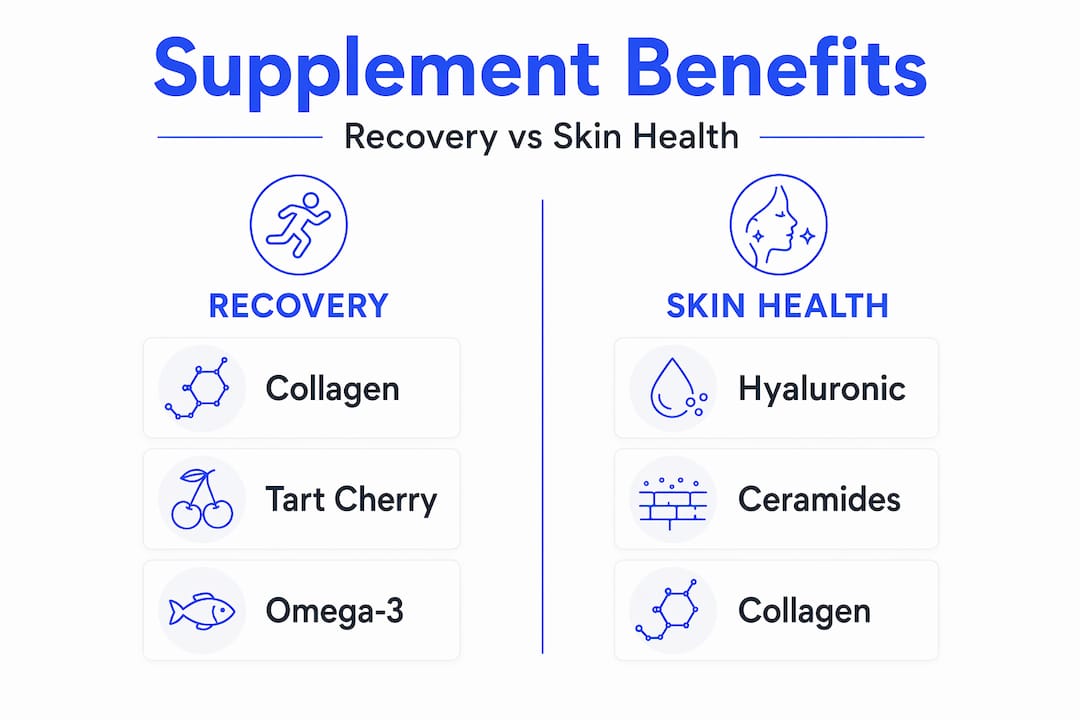
Oral hyaluronic acid (also called hyaluronan) has been the subject of several well-designed RCTs. A 2025 RCT confirmed dose-dependent improvements in skin hydration, barrier function as measured by TEWL, elasticity, and wrinkle depth in participants taking oral hyaluronan. Critically, 120 mg per day emerged as the most effective dose in that research. Lower doses produced weaker effects, which reinforces why dose selection matters as much as ingredient selection.
Key findings from oral hyaluronan research:
- Hydration: Statistically significant improvements in corneometer readings (measuring water content in the outer skin layer)
- Barrier function: Reduced TEWL, meaning less water escaping through the skin surface
- Elasticity: Improved skin firmness scores using cutometric assessment tools
- Wrinkle depth: Measurable reductions in wrinkle volume and depth on facial imaging
These aren’t cosmetic marketing claims. They’re clinical endpoints measured with standardized instruments in controlled studies. For anyone seeking natural solutions for aging skin concerns, this is meaningful data. Explore supplements for skin health to see how oral and topical approaches can work together.
Pro Tip: Oral skin supplements work from the inside out, while a quality topical like a skin firming cream supports the skin barrier externally. Combining both approaches targets hydration and elasticity at multiple levels simultaneously.
Why ingredient-specific analysis beats generic supplement advice
Here’s the uncomfortable reality: most supplement marketing is built on borrowed evidence. A brand will cite a study on a specific form of an ingredient at a precise dose, then reformulate their product with a cheaper variant at a fraction of the amount, and still claim the same benefits on the label.
Generic claims like “supports joint health” or “promotes radiant skin” tell you almost nothing. They’re designed to avoid regulatory scrutiny while sounding persuasive. What actually matters is whether the specific ingredient form in your supplement, at the dose provided, was studied in the target population using relevant outcome measures.
The most defensible approach is ingredient- and outcome-specific: look for mechanistic rationale combined with human RCTs or systematic reviews, and demand that the outcome measures reported are relevant to your actual goal, whether that’s recovery time, joint pain scores, or skin hydration metrics.
Mechanistic rationale means understanding why an ingredient should work, not just that a trial said it did. When you understand the mechanism (for example, why collagen peptides supply specific amino acids needed for cartilage synthesis), you can better evaluate whether the product you’re using is actually set up to deliver that mechanism. Guidance on choosing supplement ingredients with this framework in mind can sharpen your decision-making considerably.
The other pitfall is ignoring trial limitations. Small sample sizes, short durations, and heterogeneous populations all reduce how confidently you can apply results to yourself. A 6-week trial in sedentary older adults doesn’t tell you much about outcomes for an active 35-year-old athlete. Reading research critically, not just favorably, is the discipline that separates a well-optimized supplement routine from an expensive guess.
Explore clean supplements and skincare solutions
Applying what you now know about evidence-based supplementation means choosing products that actually match clinical standards for ingredient form, dose, and purity.

At Cohld, every supplement starts with ingredient integrity. Sourced from grass-fed, pasture-raised animals and produced in GMP-compliant US facilities, the product range is built around the same standards the best clinical trials demand. From grass-fed collagen peptides formulated for recovery and joint support, to a skin firming cream that complements oral skin supplementation, each product is designed for people who’ve already done the homework. Browse the full supplement collection and apply the ingredient-specific thinking you’ve built here to find the right fit for your goals.
Frequently asked questions
Are natural supplements always safer than synthetic ones?
Natural supplements can reduce exposure to artificial additives and fillers, but safety still depends on ingredient purity, appropriate dosing, and individual health factors like kidney function or medication interactions.
How can I tell if a supplement’s benefit is evidence-based?
Look for randomized controlled trials or systematic reviews that use the same ingredient form and dose as the product, with outcome measures directly tied to your health concern. As clinical evidence confirms, ingredient-specific research is far more reliable than broad categorical claims.
What is the best supplement for joint health?
Low-molecular-weight collagen peptides have strong RCT evidence for early-stage knee osteoarthritis, while omega-3 fatty acids may help with inflammation-driven joint symptoms, though results vary by individual and condition severity.
Do oral skin supplements actually reduce wrinkles?
Yes, with the right dose. Oral hyaluronan at 120 mg/day shows statistically significant reductions in wrinkle depth and improvements in skin elasticity and hydration based on RCT data with standardized measurement tools.