
Not every supplement on the shelf deserves space in your training bag. While the market floods athletes with options, research consistently shows that only a handful of compounds deliver meaningful, measurable recovery benefits. The rest? Largely noise. Post-exercise protein and carbohydrate timing accelerates muscle repair and glycogen replenishment far more reliably than stacking a dozen random capsules. This guide cuts through the confusion and gives you a clear, evidence-based framework for choosing supplements that actually move the needle.
Table of Contents
- Understanding recovery: The basics behind muscle restoration
- Key supplements: Evidence and effectiveness for recovery
- Whole foods vs. supplements: Which should you prioritize?
- Personalizing supplementation: Clean and ancestral nutrition in practice
- What most guides miss: The real path to balancing supplementation and recovery
- Explore clean, science-backed supplements for recovery
- Frequently asked questions
Key Takeaways
| Point | Details |
|---|---|
| Evidence matters | Choose supplements proven to support recovery, such as tart cherry and omega-3s. |
| Prioritize whole foods | Maximize recovery benefits with natural, fiber-rich foods before considering supplements. |
| Timing is crucial | Consume protein and carbohydrates right after exercise for the best recovery outcomes. |
| Personalization works | Adapt supplementation based on your activity, goals, and dietary gaps using clean, ancestral nutrition. |
Understanding recovery: The basics behind muscle restoration
Recovery is not simply “resting after a hard session.” It is a precisely orchestrated sequence of biological events. After intense exercise, your muscle fibers develop microscopic tears, glycogen stores drop significantly, and inflammation markers spike. Your body responds by initiating protein synthesis, clearing waste metabolites, and restoring energy reserves.
Three core processes drive this restoration:
- Muscle protein synthesis (MPS): The rebuilding of damaged fiber tissue using amino acids from dietary protein
- Glycogen replenishment: Refilling carbohydrate stores in muscle and liver to fuel your next session
- Inflammation resolution: Transitioning from acute, productive inflammation to the repair phase
Timing matters enormously here. Immediate post-exercise nutrition that combines protein and carbohydrates has been shown to accelerate all three of these processes and reduce fatigue compared to eating the same food two or three hours later. The window is real. Using our nutrition collection to support this window with clean, bioavailable ingredients is one of the simplest upgrades you can make.
Following this athlete recovery checklist framework helps reinforce daily habits beyond just supplementation, covering sleep, hydration, and load management alongside targeted nutrition.
Key supplements: Evidence and effectiveness for recovery
With a clear foundation of recovery biology, we can now examine the supplements that provide tangible results. Not all compounds earn equal status in the research.
| Supplement | Primary benefit | Effective dose |
|---|---|---|
| Tart cherry | DOMS reduction, strength recovery | 480 mg extract or 30 mL concentrate |
| Omega-3 (EPA/DHA) | Anti-inflammatory, muscle protein synthesis | 2 to 3 g daily |
| Caffeine | Power output, recovery support | 3 to 6 mg per kg body weight |
| BCAAs/amino acids | Fatigue prevention, exercise tolerance | 5 to 10 g per session |
| Probiotics | Exercise tolerance, gut health recovery | Strain dependent |
Tart cherry is arguably the most underrated recovery compound available. Tart cherry supplementation demonstrates a meaningful effect size (MVC ES=0.63 to 4.82 across time points) for reducing delayed onset muscle soreness and lowering inflammation markers like C-reactive protein. This is not marginal. For athletes training on back-to-back days, that difference is felt.

Omega-3 fatty acids work through a different but complementary pathway. Taking 2 to 3 g of EPA/DHA daily reduces both inflammatory markers and DOMS while also supporting muscle protein synthesis. The key is consistency. Taking omega-3s daily rather than only around training sessions produces the most reliable results.
Caffeine is often thought of purely as a performance booster, but it also plays a recovery role. Caffeine at 3 to 6 mg/kg consistently improves power output and supports post-exercise recovery in elite athletes. The mechanism involves glycogen resynthesis and reduced perception of muscle fatigue.
Amino acids and probiotics round out the evidence-backed list. BCAAs, arginine, and citrulline, alongside specific probiotic strains, show real promise for preventing premature fatigue and improving exercise tolerance over repeated training sessions.
Pro Tip: Combine tart cherry concentrate with your post-workout protein and carb meal. The anti-inflammatory effect of the anthocyanins pairs naturally with the anabolic signal from protein and insulin spike from carbohydrates. It is a clean, food-based stack with genuine research backing it.
You can review our supplement options or read our clean supplements guide to understand why ingredient sourcing matters as much as the compound itself.
Whole foods vs. supplements: Which should you prioritize?
After reviewing effect-driven supplements, it is crucial to determine when supplements are truly preferable to whole foods.
“The nutrient synergy found in whole foods, including fiber, phytonutrients, and co-factors, makes them the superior default. Supplements serve best as targeted additions when the diet cannot realistically supply sufficient amounts.” — Sports nutrition research consensus
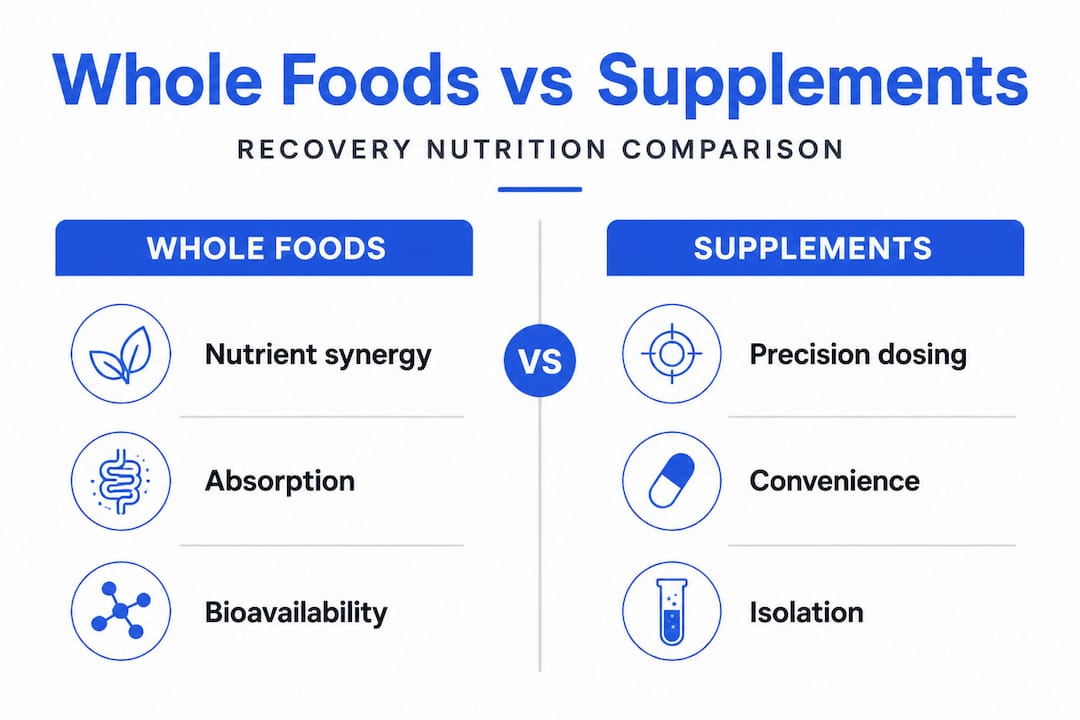
Here is how the two approaches compare in practice:
| Factor | Whole foods | Supplements |
|---|---|---|
| Nutrient synergy | High, cofactors enhance absorption | Low, isolated compounds |
| Bioavailability | Generally superior | Variable, form dependent |
| Convenience | Requires preparation | High |
| Cost efficiency | Better long term | Can be high for quality products |
| Best use case | Daily nutrition foundation | Filling specific gaps |
Whole foods remain superior to supplements due to nutrient synergy, fiber, and bioavailability. A sardine provides omega-3s, vitamin D, calcium, and selenium together. A fish oil capsule provides only isolated fatty acids. Both are useful. One is the default.
When to prioritize supplements over whole foods:
- Training volume outpaces diet: Athletes in heavy blocks may not eat enough whole food omega-3 sources to meet their anti-inflammatory demands
- Short recovery windows: When you have less than 24 hours between sessions, a fast-absorbing protein and carb supplement beats waiting to cook
- Digestive load is a concern: Pre-competition, a targeted supplement avoids the GI distress that heavy whole food meals can cause
- Micronutrient shortfalls: Organ meats cover most bases, but when access is limited, targeted supplementation bridges the gap
Understanding these trade-offs is part of a natural supplement approach that respects both ancestral nutrition and modern science. Our grass-fed supplement choices reflect this philosophy directly. Beyond nutrition, tools like detoxification strategies also complement a clean recovery protocol.
Personalizing supplementation: Clean and ancestral nutrition in practice
Having weighed natural foods against supplements, let us discuss how to create a recovery approach tailored to you.
The biggest mistake athletes make is copying someone else’s supplement stack. Supplement efficacy varies substantially by sport type, dosing protocol, timing, and individual factors including gender. Women are significantly underrepresented in sports nutrition research, meaning many standard dosing recommendations were built on male-athlete data. That gap matters when you are deciding what to take and how much.
Key variables to assess before building your stack:
- Sport type: Endurance athletes prioritize glycogen replenishment and omega-3s; strength athletes may lean toward creatine and collagen peptides
- Training frequency: Daily athletes need faster-acting recovery tools; those training three times per week have more time to rely on whole food sources
- Dietary gaps: Identify what your current food intake is genuinely missing before adding supplements
- Recovery window: Short recovery periods under 24 hours benefit most from immediate carb and protein timing combined with hydration
For those drawn to clean, ancestral nutrition, the priority list is clear. Tart cherry, omega-3s from fatty fish, and organ meats for micronutrients form the food-first foundation. Supplements layer on top only where food falls short. This is not anti-supplement thinking. It is intelligent prioritization.
Pro Tip: Before adding any new supplement, track your diet for one week and identify your three biggest nutritional gaps. Then choose one targeted supplement to fill the most critical gap. Build from there rather than starting with a full stack.
Our clean supplement picks and collagen supplement guide are built around this individualized, food-first philosophy. You can also reference the athlete wellness essentials framework for a broader look at where supplements fit within overall performance health.
What most guides miss: The real path to balancing supplementation and recovery
Most supplement guides are either cheerleading for a product or buried in caveats. Neither serves athletes well. Our experience working with clean nutrition principles has taught us something the research quietly confirms: the most effective supplement strategies are also the simplest.
The value of clean supplements is not just about purity for its own sake. Synthetic fillers, artificial binders, and hormone-disrupting additives create a physiological burden that blunts the very benefits you are supplementing for. Choosing grass-fed, pasture-raised sources removes that interference. It is not a marketing angle. It is basic physiology.
We also want to be direct about the gaps in current research. Female athletes remain substantially underrepresented in sports nutrition trials. Recreational athletes are studied far less than elites. Short recovery windows under 24 hours are one of the clearest areas where immediate carb, protein, and hydration timing outperforms any supplement stack. That is where you should invest first.
Finally, recovery is not only nutritional. Tools like infrared sauna therapy consistently complement nutrition-based recovery strategies for serious athletes. Your supplements should be one spoke in a larger wheel, not the wheel itself.
Explore clean, science-backed supplements for recovery
If you are ready to apply these strategies, the next step is finding clean, natural, science-backed products that genuinely support recovery rather than just promise it.

At Cohld, every product in our supplement collection is sourced from grass-fed, pasture-raised animals and manufactured in GMP-compliant, US-based facilities. No synthetic fillers. No hormone disruptors. No guesswork on the label. Whether you are looking for collagen peptides, omega-3 support, or targeted recovery compounds, our vitamin and supplement options are built around the same evidence-based principles outlined in this guide. Browse the full all natural products range to find what fits your protocol.
Frequently asked questions
Which supplement is most effective for post-workout recovery?
Tart cherry and omega-3s show the strongest evidence for reducing soreness and inflammation, while immediate protein and carbs post-exercise accelerate glycogen replenishment and reduce fatigue. Combining both approaches delivers the most reliable results.
Is protein supplementation necessary for muscle recovery?
Protein supplements are most effective when consumed immediately after training and paired with carbohydrates, but their effect is limited compared to a well-timed whole food meal. Immediate post-exercise intake is the differentiating factor, not the supplement format itself.
Should I prioritize whole foods or supplements for recovery?
Whole foods are superior in most situations due to nutrient synergy and bioavailability. Use supplements as precise additions when your diet cannot realistically cover specific recovery needs.
What role does timing play in supplement effectiveness?
Timing is one of the most impactful variables in recovery nutrition. Taking protein and carbs immediately after exercise accelerates muscle repair and replenishes glycogen far more effectively than delayed intake.