
You invest in quality skincare. You take your collagen peptides every morning. You apply a carefully chosen tallow cream at night. Yet weeks pass and your skin still feels like it’s moving at half speed. The culprit isn’t usually the ingredient itself. It’s absorption. Skin bioavailability, meaning how much of a nutrient actually penetrates the skin and gets used, is the hidden variable that separates results from disappointment. This article walks you through exactly how to fix it, using natural, evidence-backed methods that work with your skin rather than against it.
Table of Contents
- What you need to know about skin bioavailability
- Proven ways to enhance skin bioavailability naturally
- Tools and technologies: delivery systems that boost absorption
- Common mistakes and troubleshooting for optimal skin delivery
- How to verify your results and adjust your approach
- The bigger picture: why smarter bioavailability matters for your skin and health
- Support your healthy skin journey with natural solutions
- Frequently asked questions
Key Takeaways
| Point | Details |
|---|---|
| Skin barrier matters | Improving skin bioavailability starts with understanding and supporting the skin’s natural protective barrier. |
| Natural enhancers are effective | Evidence shows that oleic acid, terpenes, and humectants boost the delivery of nutrients safely. |
| Synergy is key | Combining oral with topical strategies results in better, longer-lasting skin health. |
| Precision prevents irritation | Balancing enhancer strength and pH can dramatically improve results while minimizing the risk of side effects. |
| Modern tools work | New delivery systems like liposomes and ethosomes offer powerful ways to improve nutrient absorption in skincare. |
What you need to know about skin bioavailability
Bioavailability in skincare means the percentage of a topical nutrient that successfully crosses the skin barrier and becomes biologically active at the target site. Think of it as the delivery rate. High bioavailability means more of what you apply actually reaches the cells that need it.
The main obstacle is the stratum corneum, the outermost layer of skin. It’s a tightly packed wall of dead cells held together by a lipid matrix made of ceramides, fatty acids, and cholesterol. As research confirms, topical bioavailability is limited by this stratum corneum lipid barrier. It’s the skin’s first line of defense against pathogens, pollution, and water loss. Unfortunately, it’s also what blocks a significant fraction of the nutrients you apply.
Here’s why this matters for specific ingredients:
- Retinoids: Large molecular size makes crossing the SC difficult without a carrier
- Niacinamide: Polarity limits passive diffusion through the lipid-heavy SC
- Peptides: Charged molecules that struggle to partition into lipid-based barriers
- Vitamin C (ascorbic acid): pH sensitivity reduces stability and permeation
- Collagen fragments: Molecular weight usually too high for unaided absorption
Harsh chemical enhancers like sodium lauryl sulfate do temporarily force nutrients through, but they also disrupt the SC’s natural integrity, leading to irritation and long-term barrier damage. That’s exactly why the science of natural skincare points toward gentler, biomimetic approaches that enhance delivery without dismantling your skin’s protective structure.
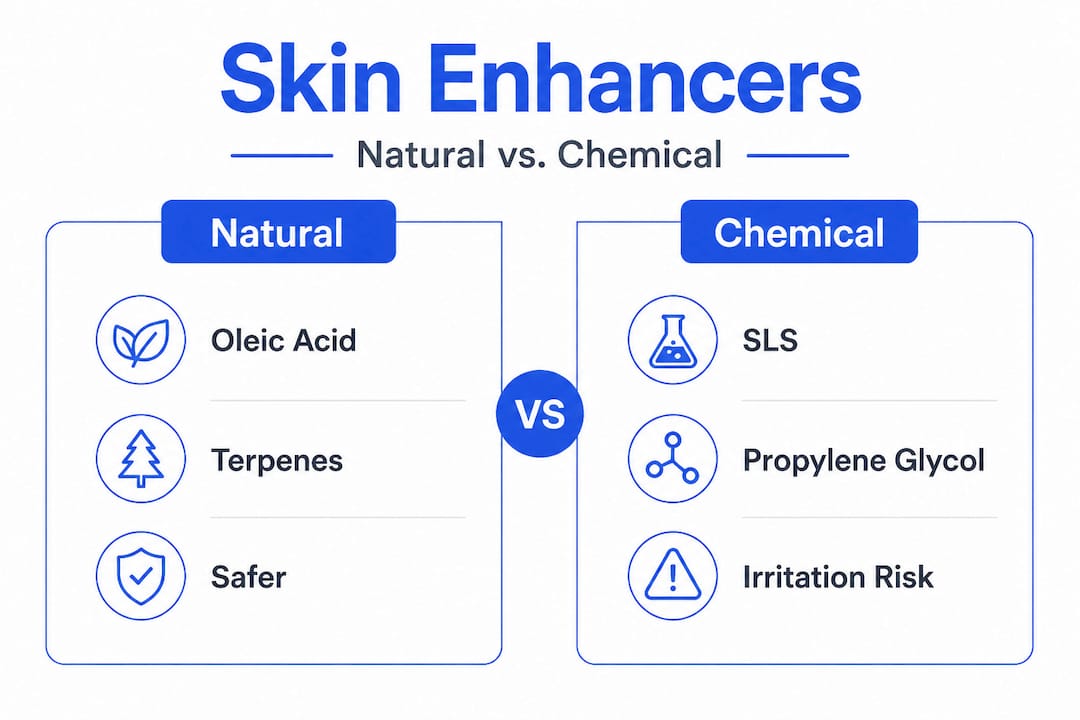
| Barrier factor | What it affects | Natural workaround |
|---|---|---|
| SC lipid structure | Limits fat-soluble nutrient entry | Oleic acid pre-treatment |
| Skin hydration level | Reduces permeability when dry | Humectants before actives |
| Molecular size | Blocks large molecules | Nano or liposomal delivery |
| Skin pH | Alters ionization of polar compounds | pH-matched formulations |
Proven ways to enhance skin bioavailability naturally
Now that you understand the barrier, here’s how to work around it. These steps are practical, safe, and can be layered into any routine.
- Hydrate first. Apply a humectant like hyaluronic acid or glycerin before your actives. A well-hydrated SC is measurably more permeable.
- Use oleic acid-rich oils as a base. Oleic acid is found in olive oil, marula oil, and grass-fed tallow. It temporarily softens SC lipids, opening channels for other nutrients to follow.
- Layer in the right order. Apply enhancer (oil or serum) first, then your active ingredient, then a sealant to lock moisture in.
- Match pH to your active. Niacinamide, for example, permeates better at near-neutral pH. Vitamin C works better at a lower pH around 3.5.
- Consider terpene-rich botanicals. Ingredients like menthol, limonene (from citrus), and cineole from eucalyptus are natural terpenes with documented skin-penetrating properties.
- Allow contact time. Don’t rinse or wipe actives immediately. Give the skin at least 15 to 20 minutes of absorption time before applying the next layer.
Research backs the approach directly: oleic acid and terpenes disrupt SC lipids and measurably improve permeation. The mechanisms behind this, including how fatty acids, terpenes, and humectants improve partitioning and hydration, are well-documented in skin science.
When choosing natural options, the contrast with conventional chemical enhancers becomes clear:
| Enhancer type | Effectiveness | Irritation risk | Long-term safety |
|---|---|---|---|
| Oleic acid (natural) | Moderate to high | Low | High |
| Terpenes (natural) | Moderate | Low to moderate | High |
| DMSO (chemical) | Very high | Moderate to high | Concerns at high use |
| Ethanol (chemical) | High | Moderate | Concerns with chronic use |
| SLS (chemical) | High | High | Damages barrier over time |
Pro Tip: Blend oleic acid with a terpene-rich ingredient like diluted tea tree or eucalyptus oil before applying your active serum. The dual-action combination has been shown to work synergistically, creating better permeation than either alone.
Tools and technologies: delivery systems that boost absorption
Beyond ingredient stacking, modern formulation science offers delivery vehicles that literally carry nutrients through the SC. You don’t need to be a formulator to benefit from these, but you do need to know what to look for on a label.
Liposomes are tiny spherical capsules made from phospholipids, the same fat-based molecules found in your cell membranes. They merge with skin lipids naturally and release their payload gradually in the deeper layers. Ethosomes are similar but contain a higher concentration of ethanol, which makes them more flexible and able to penetrate deeper into the dermis. Transfersomes are ultra-deformable vesicles that squeeze through SC pores more efficiently than standard liposomes.
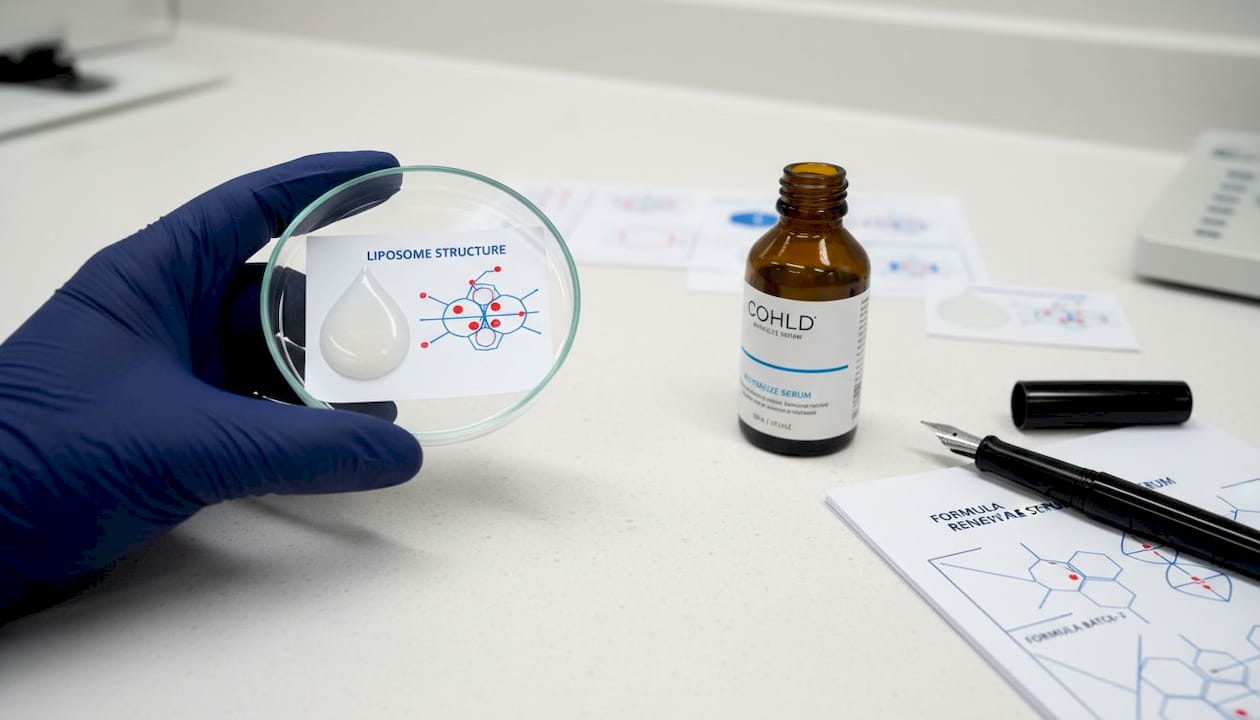
Nano-delivery systems like liposomes and ethosomes improve nutrient bioavailability by mimicking skin lipids and enhancing retention time, making them a meaningful upgrade over standard topical application.
| Delivery system | How it works | Common nutrient pairings |
|---|---|---|
| Liposomes | Merges with SC lipids | Vitamin C, retinol, peptides |
| Ethosomes | High flexibility, deeper penetration | Niacinamide, ceramides |
| Transfersomes | Deformable structure, pore-level access | Collagen fragments, hyaluronic acid |
| Nano-emulsions | Reduces droplet size for faster absorption | Plant extracts, fatty acids |
When choosing clean technology, make sure delivery systems don’t come bundled with synthetic surfactants, PEGs, or hormone-disrupting preservatives. A liposome is only as good as what surrounds it.
Pro Tip: Products that combine oleic acid as a penetration opener with a liposomal delivery system give you a two-stage advantage. The oleic acid softens the barrier, and the liposomes carry nutrients deeper and hold them there longer for more sustained results.
Common mistakes and troubleshooting for optimal skin delivery
The most common reason people don’t see results isn’t a bad product. It’s avoidable application mistakes.
- Using too much enhancer. More is not better. High concentrations of even natural enhancers can irritate or over-disrupt the SC.
- Ignoring pH. Applying a low-pH vitamin C serum right after a high-pH toner can destabilize the active before it even absorbs.
- Skipping moisturizer. A dry SC blocks nutrient flow. Always seal in hydration after actives.
- Mixing incompatible actives. Retinoids and niacinamide can be layered, but AHAs and retinol should be separated to avoid irritation.
- Rushing the routine. Applying too many steps too quickly doesn’t allow each ingredient to set and absorb properly.
Safety note: Always patch test any new combination of enhancers and actives on a small area of skin before full-face application. Introduce new actives one at a time, wait one week between additions, and monitor your skin’s response. If redness, flaking, or stinging occurs, reduce frequency before pulling the product entirely.
As research confirms, you need to balance enhancer concentration carefully to avoid irritation, and pH optimization is especially important for polar nutrients like niacinamide. The reality is that enhancers can cause irritation at high concentrations, and results vary between healthy and compromised skin. If you have rosacea, eczema, or a disrupted barrier, natural supplements versus synthetic options designed for sensitive skin become even more critical.
How to verify your results and adjust your approach
Starting a new bioavailability-focused routine is step one. Knowing whether it’s working is step two.
- Track hydration levels weekly. Pinch the skin lightly on your cheek. Improved hydration means faster rebound and less creasing. This is a simple but reliable indicator of SC health.
- Photograph in consistent lighting. Take weekly front-facing photos in natural light. Changes in skin tone, firmness, and texture become visible over four to eight weeks.
- Monitor firmness and bounce. Press a finger gently into your cheek and release. Improved collagen activity shows up as faster, springier return.
- Combine oral and topical strategies. Topical actives work better when paired with oral collagen and antioxidants. Check out collagen supplement results for a step-by-step guide on integrating both.
- Adjust with the seasons. Cold, dry air reduces skin hydration and tightens the SC. Increase humectants in winter and consider a richer carrier oil to maintain consistent bioavailability year-round.
One key fact worth knowing: skin hydration increases permeability, and even a controlled temperature increase can enhance nutrient flux significantly. This is why warm, damp skin right after a shower is actually an ideal window for applying your most important topicals.
The bigger picture: why smarter bioavailability matters for your skin and health
Here’s the uncomfortable truth about most skincare marketing: it leads you to believe that higher concentrations equal better results. So people buy 20% vitamin C, triple-strength retinol, or hyper-concentrated peptide serums and wonder why their skin reacts poorly or doesn’t improve.
The problem isn’t potency. It’s strategy. A 10% vitamin C formula delivered effectively through an optimized carrier at the right pH will outperform a 20% formula sitting on top of a dry, unprepared SC. Chasing miracle molecules or maximum concentrations ignores what the skin actually needs: the right dose, at the right depth, in the right environment.
Natural, skin-respecting routines are also more sustainable over time. You’re not constantly fighting your barrier. You’re working with its biology, which means less irritation, more consistency, and better long-term outcomes. This is where the synergy between topical and oral nutrition becomes genuinely powerful. Research confirms that pairing topical enhancers with oral nutrients, like collagen peptides and carotenoids, creates measurable synergistic effects on skin health.
The evidence around peptide therapy evidence also supports the case for oral and topical peptide use working together. And as our clean supplements perspective outlines, purity matters just as much as potency. A bioavailable nutrient from a clean source beats a high-concentration nutrient loaded with fillers every time.
The future of skin health isn’t in stronger formulas. It’s in smarter systems built on real biology.
Support your healthy skin journey with natural solutions
When bioavailability becomes your priority, the products you choose need to be built with that same intelligence.

At Cohld, every formulation starts with ingredient quality and sourcing integrity. Our skin firming cream is crafted to work with your skin’s natural lipid structure, not against it. Our grass-fed collagen peptides are designed for maximum bioavailability from the inside out, sourced exclusively from pasture-raised animals with no synthetic fillers. Whether you’re building a topical routine or an oral supplement protocol, our full product range offers clean, transparent, and effective options that match the science you’ve just read about.
Frequently asked questions
What is the bioavailability of nutrients in topical skincare?
Bioavailability refers to how efficiently nutrients penetrate the skin barrier and become active at the cellular level. The stratum corneum lipid barrier is the primary reason most topically applied nutrients only partially absorb.
Can I improve skin absorption with only oral supplements?
Oral supplements meaningfully support skin health, but pairing them with topical enhancers creates better synergistic outcomes than either approach alone.
Are natural enhancers safer than chemical options?
Natural enhancers like oleic acid and terpenes are generally safer and more biocompatible than chemical alternatives, though they still require measured, careful application.
Does skin pH affect how well nutrients are absorbed?
Absolutely. Neutral pH increases niacinamide flux roughly twofold, and getting pH right for your actives is one of the easiest and most overlooked upgrades you can make.
What should I do if skin enhancements cause irritation?
Reduce concentration and application frequency right away. Patch test every new routine on a small area first, and if irritation persists at any concentration, consult a dermatologist before continuing.
Recommended
- Why natural skincare works: Science, purity, and results
- Step-by-Step Collagen Supplement Guide for Healthier Skin
- Why avoid synthetic supplements? The case for natural
- Skin Firming Cream | DMAE + CoQ10 + Hyaluronic Acid | Cohld
- Natural ingredients that boost cognition and fight inflammation – SuperNatural
- How to boost scalp moisture and restore comfort naturally – Victory Serums